Does Katori Cutting Board Dull Knives? What to Know
Short answer: This website has not independently tested whether the Katori titanium cutting board dulls knives, so we can't say it does or doesn't. In general, metal cutting surfaces can wear knife edges faster than wood or plastic, but how much depends on the board's material and finish, your blade steel, your cutting technique, and how often you use it. Katori markets its board as knife-friendly; treat that as a manufacturer claim rather than a guarantee.
Below, we explain how cutting surfaces affect a blade, how titanium compares with wood and plastic, and how to decide whether a metal board fits the knives you own. For a broader product overview, see our Katori titanium cutting board review.
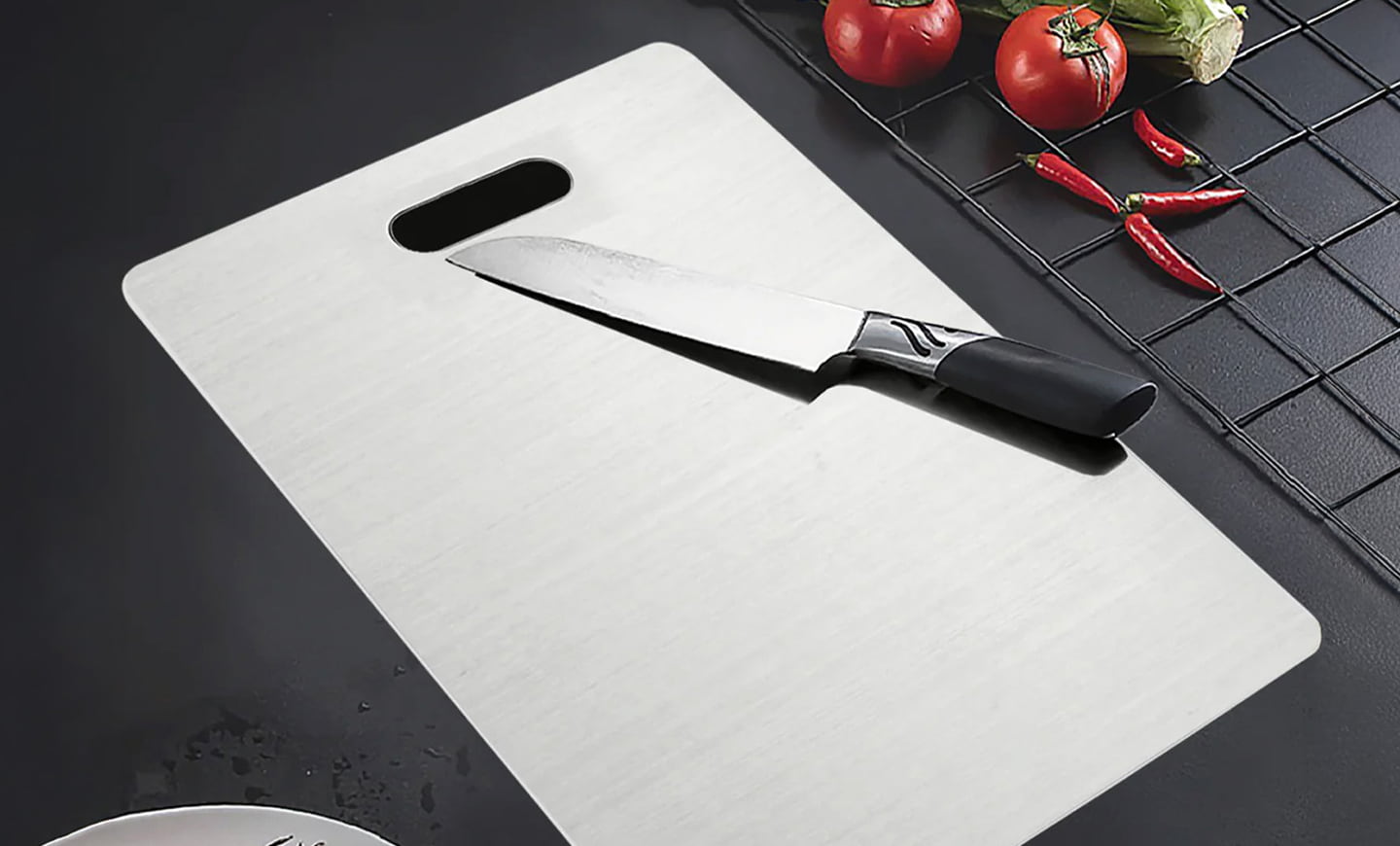
How Cutting Boards Dull Knives
A knife edge is a very thin strip of steel. Every time it strikes a board, the edge either sinks slightly into the surface or meets resistance. Softer surfaces give a little, so the edge takes less impact. Harder surfaces push back, and over time the edge can roll, bend, or chip microscopically. That's what most people notice as "dulling."
Three things matter most:
- Surface hardness and finish. A harder, unyielding surface generally puts more stress on the edge than one with some give.
- Blade steel. Very hard, thin edges (common on Japanese knives) hold sharpness well but can be more prone to chipping on hard surfaces. Softer Western steels tend to roll instead, which honing can often correct.
- Technique and frequency. Hard downward chopping and scraping food sideways with the edge wear a blade faster than slicing, and daily use adds up faster than occasional use.
Material Hardness vs. Practical Cutting
It's tempting to compare hardness numbers and stop there, but practical cutting is more complicated. Titanium is often described as softer than hardened knife steel, and that is part of why it is sometimes promoted as gentler than steel or glass surfaces, but hardness varies by alloy and treatment. Either way, a metal board doesn't absorb the blade the way wood fibers or plastic do, so the edge still meets a firm surface on every cut.
Katori has not published hardness specifications that this website has verified, and the exact alloy and surface treatment matter. That's why we avoid giving a Katori-specific verdict on edge wear and instead focus on the general factors you can weigh.
Titanium vs. Wood vs. Plastic for Your Knives
This table summarizes widely accepted general characteristics of each material. It is not based on testing of any specific product.
| Material | Feel under the knife | General effect on edges |
|---|---|---|
| Wood | Slight give, quiet | Generally regarded as gentle |
| Plastic | Some give, scars with use | Generally gentle |
| Metal (incl. titanium) | Firm, can be louder | Can wear edges faster; varies by alloy and finish |
How to Care for Your Knives on a Metal Board
Slice instead of chopping hard
A controlled slicing or rocking motion puts less shock on the edge than hammering straight down. Let the knife's weight do most of the work.
Don't scrape with the edge
Flip the knife and use the spine, or a bench scraper, to move chopped food. Dragging the edge sideways across any board is one of the quickest ways to roll or chip it.
Hone often, sharpen when needed
Honing realigns a slightly bent edge; sharpening removes metal to make a new one. A few light strokes on a honing rod before each cooking session can keep a softer Western knife cutting well. Very hard Japanese blades are more likely to chip than bend, so many owners skip a steel rod and use a fine ceramic rod or a whetstone instead. If honing no longer restores a clean cut, it's time to sharpen.
Choose the right knife for the board
If you use a metal board, reach for a sturdy everyday chef's knife or a serrated knife rather than your thinnest, most expensive blade.
Keep a second board
Some cooks keep a wood board for delicate knife work and use a non-wood board for tasks like quick rinsing. Whatever you choose, use separate boards or wash thoroughly between raw meat and ready-to-eat foods.
If You Already Own a Metal Board: A Simple Routine
- Before cooking: set the board on a damp towel or non-slip mat so it can't move, and give your knife a few light honing strokes if you use a rod.
- While cutting: slice rather than chop hard, and use the spine to move food.
- After cooking: wash the knife by hand, dry it, and store it in a block, sheath, or on a magnetic strip so the edge doesn't knock against other utensils.
- Every few weeks: try the tomato or paper test below. If the knife struggles even after honing, sharpen it or have it professionally sharpened.
- Keep notes: if you notice your knife needs sharpening noticeably more often since switching boards, that's your own answer to whether the board suits your knives.
For the wider trade-offs beyond knife care, see the Katori pros and cons guide.
When to Choose a Softer Board Instead
A wood or soft synthetic board may suit you better if you own expensive or very hard Japanese knives, care most about how long an edge lasts, rarely sharpen, or simply enjoy the quieter feel of wood. If you're more interested in cleanup and moving away from scratched plastic, and you're comfortable maintaining your knives, a metal board may be worth considering.
Still unsure about the seller? Read our guide answering is Katori cutting board legit, or see what buyers mention in Katori reviews and complaints.
How to Tell if Your Knife Is Getting Dull
If you try any new board, it helps to notice changes in your edge early. Simple kitchen checks work well:
- Tomato skin: a sharp edge bites into the skin with light pressure; a dull one slides or squashes.
- Paper slice: hold a sheet of printer paper and slice downward. A clean, quiet cut is a good sign; snagging or tearing suggests the edge needs attention.
- Onion layers: a dull edge crushes rather than cuts, and you may notice more eye irritation.
Try one of these before and after a few weeks on any new board. It's a far better guide for your own kitchen than any general claim, including ours.
Decision Guide by Knife Type
Everyday Western-style stainless knives: these edges tend to roll rather than chip and respond well to honing. A firm board is less of a concern if you hone regularly.
Thin, hard Japanese-style blades: these hold an edge well but can be more prone to micro-chipping on firm surfaces. A wood board is the cautious choice for them.
Serrated knives: bread knives and serrated utility knives are less sensitive to board surface for everyday use.
Inexpensive knives you sharpen often: board choice matters less than technique; prioritize the cleanup and feel you prefer.
Before ordering, check the board's listed dimensions and the return terms, in case the feel doesn't suit your knives.
For considerations beyond your blades, our Katori pros-and-cons decision guide weighs cutting feel, stability, cleanup claims, and value.
Bottom Line
There's no independent evidence on this site showing that Katori dulls knives or that it protects them. Metal surfaces in general can be harder on edges than wood or plastic, so the right choice depends on your knives, your technique, and what you value in a board. Good knife habits matter on any surface.
FAQ
Does Katori cutting board dull knives?
This website has not tested Katori's effect on knife edges. Metal cutting surfaces can wear blade edges faster than softer wood or plastic boards, but the actual effect depends on the board's surface, your knife steel, your cutting technique, and how often you use it.
Is titanium harder than knife steel?
Not necessarily. Titanium is often described as softer than hardened kitchen-knife steel, but hardness varies by alloy, treatment, and surface finish. Katori has not published hardness data that this website has verified, so a direct comparison can't be made here.
Which cutting board is easiest on knives?
Wood boards, especially end-grain wood, and softer plastic or rubber boards are widely regarded as gentler on knife edges than hard surfaces such as glass, stone, or metal.
How can I protect my knives on a hard cutting board?
Use a slicing or rocking motion instead of chopping straight down hard, avoid scraping food with the blade edge, hone your knife regularly, and sharpen when the edge no longer bites cleanly.
Should I buy Katori if I own expensive Japanese knives?
Cooks who own thin, very hard Japanese blades are often especially careful about cutting surfaces. If edge retention is your top priority, a quality wood or soft synthetic board is the more conservative choice. Check Katori's return terms before ordering if you want to try it.
This article is based on Katori's supplied product materials and general cutting-board and knife-care knowledge; the writer has not personally tested Katori. How we write these guides.
Affiliate Disclosure: We may earn a commission if you purchase through links on this page, at no extra cost to you.