Is Katori Cutting Board Legit? What to Know Before Buying
Quick Answer
Yes, Katori appears to be a real, purchasable product. Based on the product materials and active merchant offer available to this site, the Katori titanium cutting board is marketed and sold online to U.S. shoppers. That is not the same as independently verifying every seller claim or buyer experience. But "legit" can mean several different things: whether the product exists, whether the seller is reliable, whether the marketing claims hold up, and whether pricing, shipping, and returns work the way you expect.
This website can't vouch for every one of those. What this page does is separate what appears reasonably verifiable from what is manufacturer marketing, and give you seller checks to run before you order. If you want the product overview first, read our Katori cutting board review.
What Is the Katori Titanium Cutting Board?
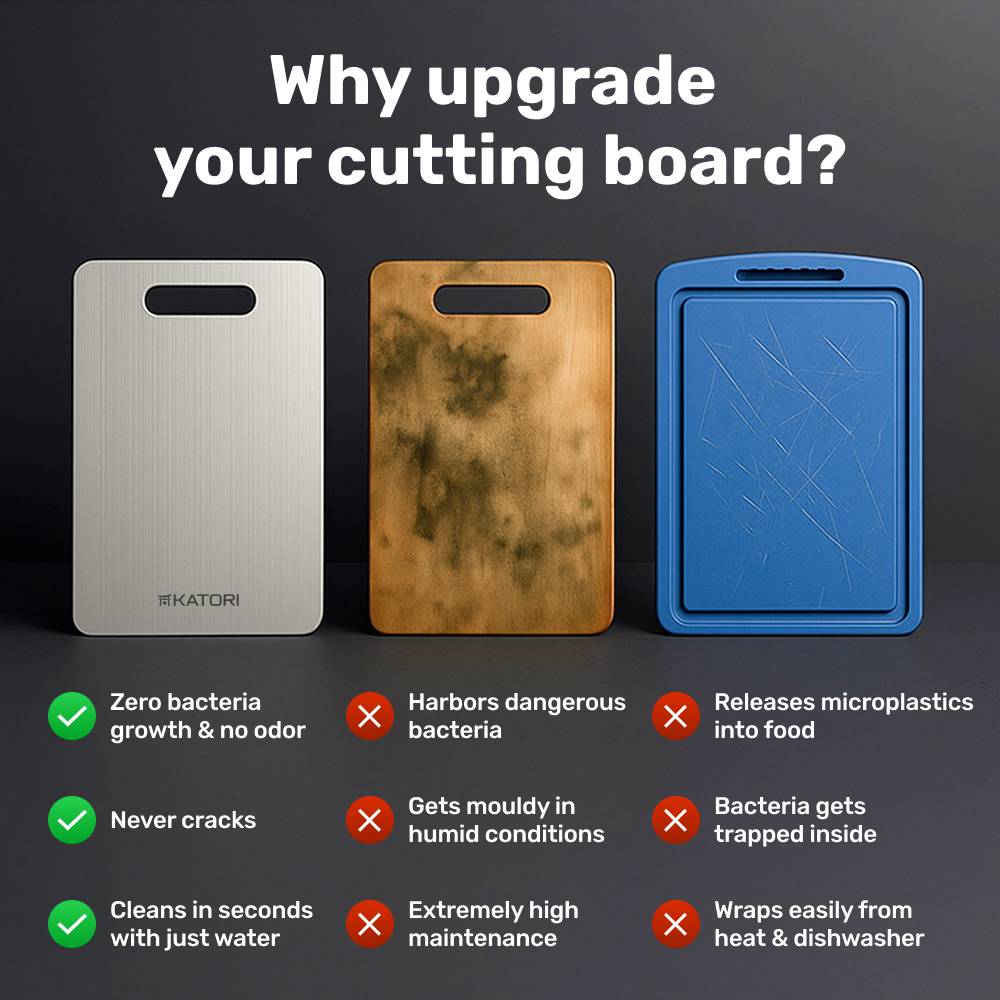
Katori is marketed as a titanium cutting board intended as an alternative to plastic and wooden boards. This site links to it through an online offer page; it has not checked whether the board is also sold in physical stores. The marketing emphasizes a non-porous metal surface, easy cleanup, and avoiding a plastic cutting surface.
Sizes, bundles, and prices are set by the merchant and can change, so the details you see at checkout are the ones that matter.
Why Shoppers Ask Whether Katori Is Legit
Shoppers often ask whether a product is legit when they first meet it through an online ad rather than a store shelf. A few reasons to slow down with any product sold this way:
- It is promoted through online advertising and affiliate pages, including this one.
- Discounts and bundle pricing can make it hard to know the real final cost.
- Health-related marketing language invites skepticism.
- Testimonials on promotional pages are chosen by the seller, so they don't settle the question on their own.
None of these automatically mean a product is bad. They are simply good reasons to read the terms carefully.
What Appears Verifiable vs. What Is Marketing Language
Reasonably verifiable
- The product is actively marketed online through a live offer page.
- Titanium, as a material, is generally considered a non-porous metal.
- The price, shipping, and return terms that apply to you are the ones the merchant shows before payment, and you can save a copy of them yourself.
Manufacturer claims (not independently verified here)
- That the board is knife-friendly.
- That it resists scratches, stains, and odors.
- Any hygiene, antibacterial, or health-related benefits.
- That it is "100% titanium" or a specific titanium grade.
Official Site or Lookalike? How to Check
Searching for a product name like "Katori cutting board" can turn up more than one website with a similar name or design. Similar-looking sites aren't necessarily fraudulent; some may be authorized resellers or affiliate pages, including this one. But you should know which business will take your payment and handle your return. This website has not determined which sites, if any, are operated by the brand owner.
- Compare the business name, not the logo. Open the terms of service, privacy policy, and refund policy on each site. If the legal business name, address, or support email differs between sites, they may be run by different companies with different return terms.
- Read the domain carefully. Small differences such as an extra letter, a plural, a hyphen, or a different ending (.com, .net, .org, .co.uk) mean a different website. Type or bookmark the address you trust instead of clicking a lookalike from a search ad.
- Check that the policies match the shop. Policies copied from another store sometimes name a different brand, country, or currency. That's a sign to ask questions before paying.
- Look up how long the domain has existed. A free WHOIS or domain-age lookup shows the registration date. A very new domain isn't proof of a problem, but it means there's little track record to go on.
- Watch for prices in another currency. A U.S. shopper seeing pounds, euros, or Canadian dollars may be on a site aimed at another market, with different shipping and return addresses.
- Pay with buyer protection. A credit card or a payment service with dispute options gives you a route if an order never arrives. Be cautious with any site that only accepts bank transfers, gift cards, or crypto.
Buying Direct vs. Amazon or Walmart: What to Compare
Titanium cutting boards using the Katori name may also appear on marketplaces such as Amazon, Walmart, or eBay. This website has not checked those listings and does not track prices, which can change often, so compare them yourself on the day you buy. Don't assume two listings are the same product just because the name or photos match.
| Compare | What to look for |
|---|---|
| Who is the seller? | On a marketplace, check the "Sold by" and "Ships from" lines. A third-party seller may not be the brand owner. |
| Is it the same product? | Compare size, thickness, number of boards, and what's included. Similar photos can be used for different products. |
| Total price | Compare the checkout total, including shipping, taxes, and any add-ons, not the list price or the "% off" banner. |
| Returns | Marketplaces often have their own return process. On the direct site, read the written policy: time limit, condition rules, return address, and who pays shipping. |
| Reviews | Marketplace reviews can include verified-purchase labels, but check that they are about this exact listing, not a merged or different product. |
Whichever you choose, keep a screenshot of the listing and the return terms on the day you order.
Product Claims Worth Examining Carefully
Non-porous titanium
Titanium is generally considered non-porous, which means liquids are less likely to soak into it than into wood. That said, a non-porous surface still needs to be washed properly after each use.
Cleaning
Smooth metal surfaces tend to rinse off easily. Follow the merchant's care instructions and standard food-safety practices, especially after handling raw meat, poultry, or seafood.
Knife friendliness and scratch resistance
Katori markets its board as knife-friendly and durable. These claims have not been independently tested by this website, and the supplied materials don't include long-term wear data. Results likely depend on your knives and how you cut.
Antibacterial and health claims
Be cautious with any marketing that implies a cutting board makes food safer or prevents microplastic exposure. No cutting board replaces proper cleaning and safe food handling. See our Health Disclaimer.
A Seller Legitimacy Checklist You Can Run Yourself
This website can't confirm who operates every Katori checkout page or how each order is handled. You can, though, check most of what matters in a few minutes before paying:
- Seller identity: look in the checkout page footer, terms of service, or privacy policy for a business name and contact address. A legitimate merchant should tell you who you are buying from.
- Customer support: find an email address, contact form, or phone number. Sending a short pre-sale question and seeing whether you get a clear reply is a simple, practical test.
- Checkout security: confirm the address bar shows a secure connection and that the domain matches the site you meant to visit.
- Returns in writing: note the return window, whether items must be unused, where returns are shipped, and who pays return postage. A return address outside the U.S. can make returns slower and costlier.
- Order confirmation: after paying, you should receive an email with an order number, itemized total, and a support contact. Keep it.
- Card statement name: the charge may appear under a company name that differs from "Katori." Note the name shown at checkout or in your confirmation so you recognize it.
If any of these is missing or unclear, that is a reason to pause, ask questions, or use a payment method with buyer protection.
What This Site Could and Could Not Check
Could check: that the Katori titanium cutting board is actively marketed, that an offer page is live for U.S. shoppers, and what the supplied product materials claim.
Could not check: the seller's fulfillment record, how quickly refunds are processed, the board's exact alloy or grade, or how it performs over months of use. Those are the questions the checklist above helps you answer for your own order. For knife-edge questions specifically, see our guide on whether Katori dulls knives.
A Legit Seller Is Not the Same as the Right Board
Seller legitimacy and product fit are separate questions: a real merchant can still sell a board that doesn't suit your kitchen. This page covers the seller side only. For whether Katori fits how you cook, such as cutting feel, sliding, knife care, and value, see our Katori titanium cutting board pros and cons. For how to weigh product complaints and testimonials, see how to read Katori reviews and complaints.

If Something Goes Wrong After You Order
- Contact the merchant first in writing, quoting your order number, and keep copies of every message.
- Check the written policy you saved at checkout and follow its return steps exactly, including any requested return authorization.
- Use tracked shipping for any return so you can prove delivery.
- Escalate through your payment provider if the merchant does not resolve the issue within its stated timeframe. Credit cards and many payment services offer dispute processes.
Final Verdict
Katori is a real, actively marketed cutting board sold as titanium, not a fictional product. Whether it's the right purchase depends on factors this website can't guarantee: the seller's fulfillment, the final price, and how the board performs with your knives.
If a non-plastic, easy-to-rinse surface appeals to you, it may be worth a look, as long as you review the checkout price, shipping, and return terms first. If knife edge retention is your top priority, a quality wooden board may suit you better.
For a focused look at buyer feedback and the concerns worth weighing, read Katori cutting board reviews and complaints, or our guide on whether Katori dulls knives.
FAQ
Is Katori Cutting Board legit?
Katori is a real, actively marketed titanium cutting board that is sold online. Whether it is a good purchase for you depends on the final checkout price, shipping and return terms, and whether its features match how you cook. Review the merchant's terms before ordering.
Is Katori a scam?
This website has no evidence that Katori is a scam, and it has not independently verified the seller or reviewed third-party complaint records. Before ordering, identify the business behind the checkout, read the current shipping and return terms, and pay with a method that offers buyer protection.
Does Katori dull knives?
Katori's marketing describes the board as knife-friendly, but this has not been independently tested by this website. Metal surfaces are generally harder than wood or plastic, so some edge wear is possible depending on your knives and cutting style.
Is Katori dishwasher safe?
Check the care instructions provided by the merchant before putting the board in a dishwasher. This website has not verified dishwasher performance, and care guidance can vary by product version.
What should I check before buying?
Confirm the final checkout price including shipping and taxes, the board dimensions, shipping destination and estimated delivery time, the return and refund policy, the seller's website address, and any warranty terms.
This article is based on Katori's supplied product materials, its live offer page, and general shopper considerations; the writer has not personally tested Katori. How we write these guides.
Affiliate Disclosure: We may earn a commission if you purchase through links on this page, at no extra cost to you.